

How We Design for Change
Buildings are lasting things. The way we use them should be too.
The most resilient environments today aren’t defined by a single program or moment in time. They’re defined by their capacity to evolve, absorb change, and support new ways of working, learning, gathering, and living, often without starting over.
Adaptability is no longer a “nice to have.” It’s a responsibility.
We see it in higher education, where one room can support lecture, collaboration, and digital production in the same day.
We see it in workplace environments that must flex between focused work, community, and culture-building.
We see it in existing buildings, where transformation unlocks new life, new relevance, and new value.
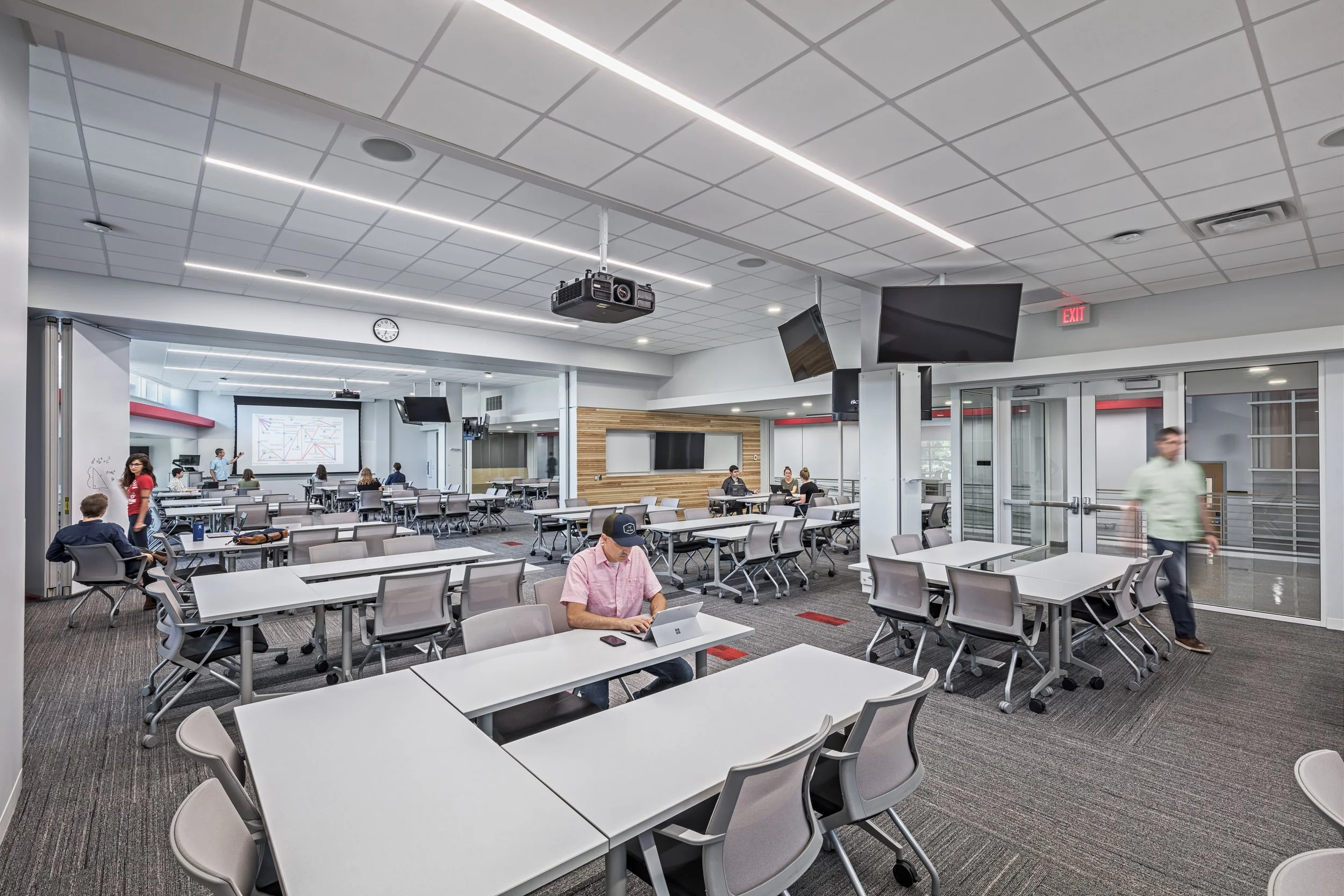
Projects like the Riffe Hall Flexible Classroom show how a single space can be reimagined to support multiple modes of learning
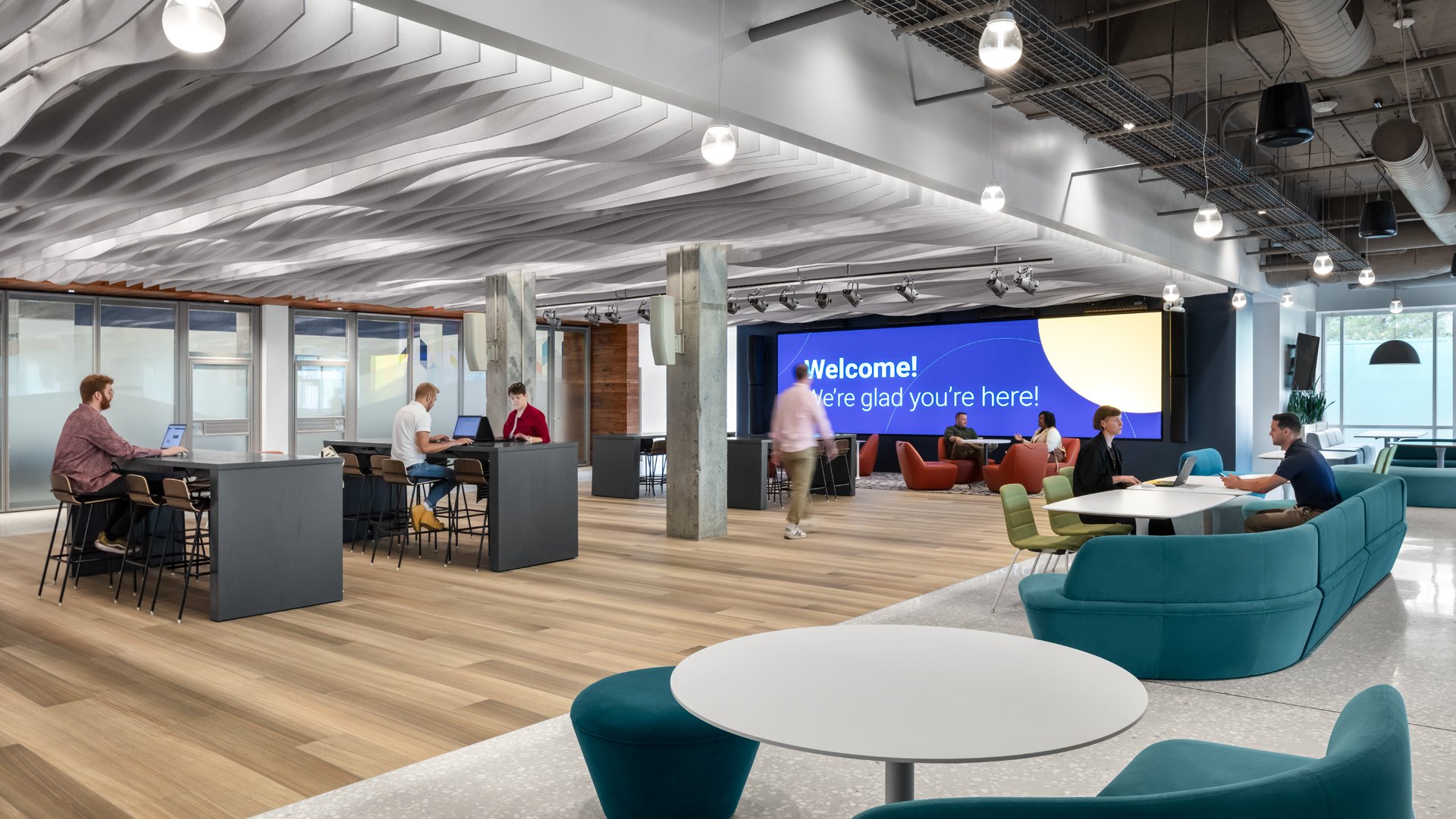
At the State Auto Campus, adaptive reuse transforms existing structures into active, people-centered amenities that anchor daily experience.
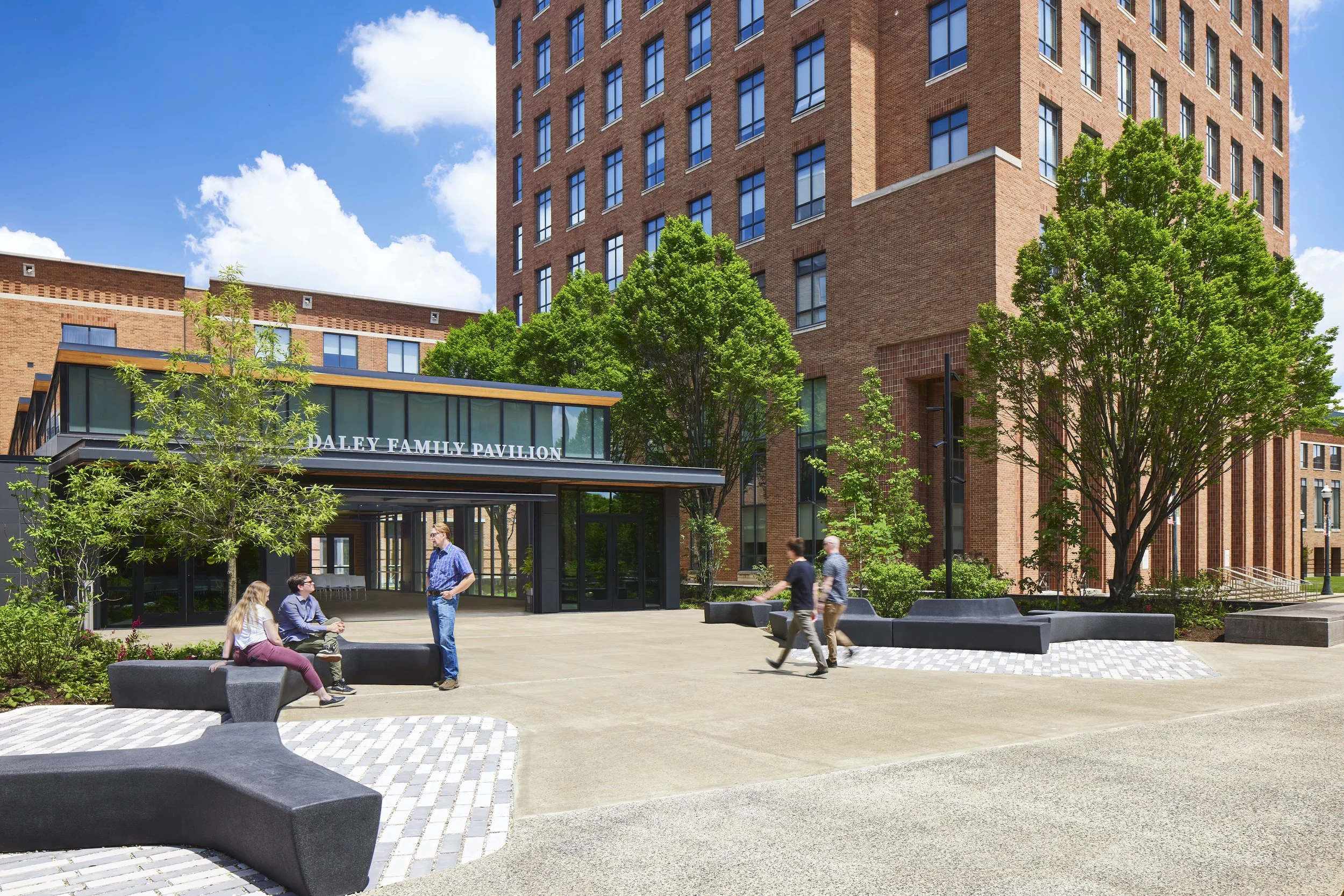
At the Daley Family Pavilion, an underutilized campus corridor becomes a year-round destination for gathering and connection.
Good design anticipates change.
Great design makes room for it.
After more than five decades of practice, we’re still guided by the same idea: transformation isn’t about chasing what’s new. It’s about shaping environments that continue to work…long after the ribbon is cut.